World Cup 2026 is approaching, and thousands of Vietnamese people are asking the same question: what do you need to prepare for a U.S. tourist visa, how long does it take, and how can you avoid being denied?
This article answers exactly what you need to know from the appropriate visa type, required documents, DS-160 application procedures, and the U.S. visa interview, to the most common reasons applications are denied. Read it once, prepare correctly, and avoid wasting time and money.
What Type of Visa Do Vietnamese Citizens Need to Travel to the U.S. for the World Cup?
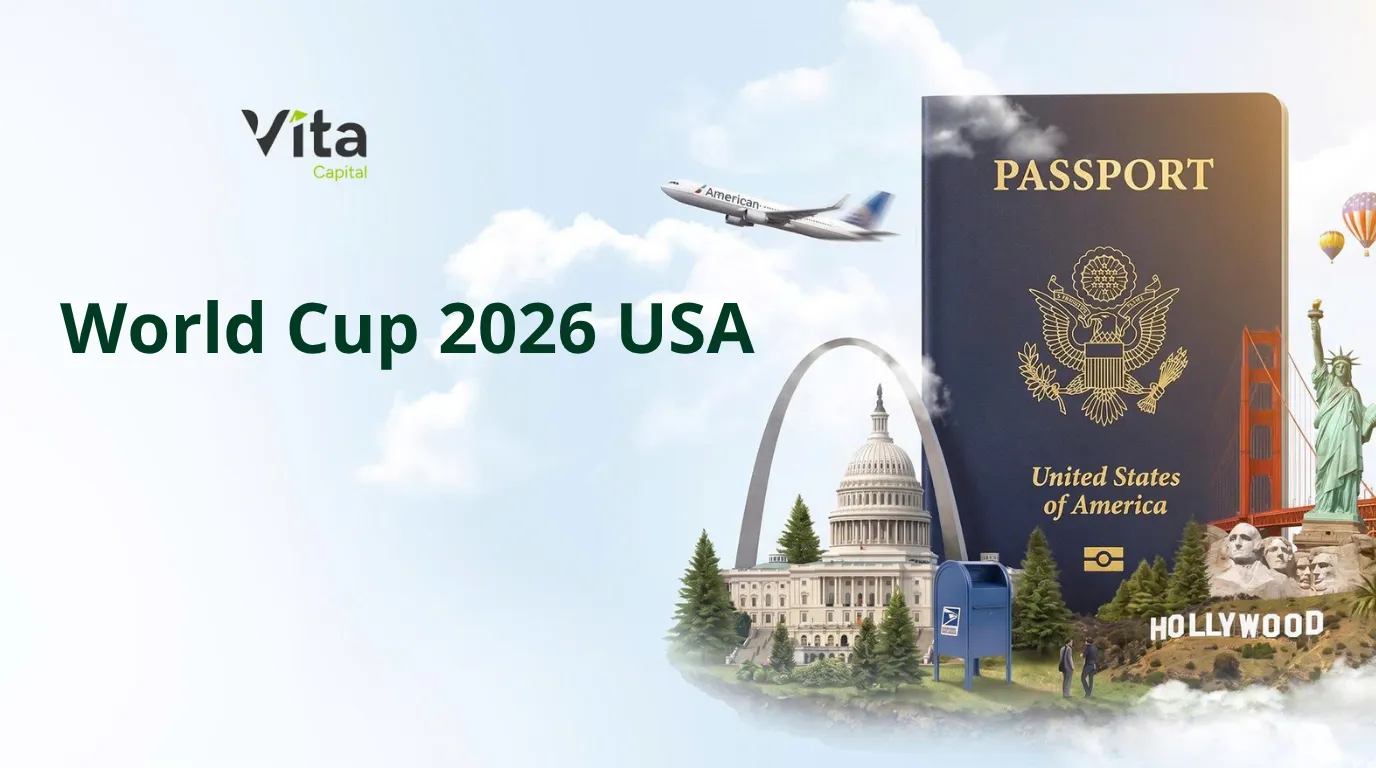
US B1/B2 tourist visa: How to get a US visa to watch the 2026 World Cup (guided by Vietnamese people).
The short answer: a B1/B2 visa, also known as a tourist and short-term business visa.
To enter the United States as a spectator for the World Cup, Vietnamese citizens must apply for a B1/B2 nonimmigrant visa. In practice, the U.S. Embassy typically issues a combined B1/B2 visa, allowing holders flexibility to travel for both tourism and business purposes.
Vietnam is not part of the Visa Waiver Program, meaning Vietnamese citizens cannot use ESTA to enter the United States. Vietnamese nationals are required to obtain a B-2 visa if they wish to travel to the U.S. to watch the 2026 World Cup.
Good news for those concerned about cost and effort: a B1/B2 visa can be issued with a validity period of up to 10 years, allowing multiple entries, with each stay lasting up to six months.
Apply once and use it for multiple trips over many years whether for the World Cup, tourism, visiting children studying abroad, or visiting relatives all with the same visa.
What Documents Are Required for the U.S. Tourist Visa Application?
A strong visa application is not simply a collection of documents, it is a convincing story demonstrating your travel purpose and your ties to Vietnam.
Mandatory Documents
Required documents include:
Original passport valid for at least six months beyond the intended departure date from the United States.
DS-160 confirmation page containing the barcode after completing the online application.
U.S.-standard passport photo (5cm x 5cm), white background, taken within the last six months.
Visa fee payment receipt.
Interview appointment confirmation.
Supporting Documents That Are Equally Important
To overcome concerns about potential immigration intent, you should emphasize the following:
Employment contract.
Appointment or promotion decision.
Salary statements from the most recent 3–6 months.
Bank statements from the most recent 3–6 months proving financial stability.
Property ownership or real estate documents in Vietnam.
Family documents such as marriage certificates and children's birth certificates.
World Cup match tickets or a detailed travel itinerary if already available.
Important Note for World Cup Travelers
If you already have match tickets, a detailed itinerary, or participation in a sports travel package, your chances of approval may increase significantly.
World Cup tickets in your application do more than prove your travel purpose; they demonstrate serious preparation and a well-planned trip.
U.S. Visa Fee and Payment Methods
The current B1/B2 visa application fee is USD 185.
In Vietnam, payment can be made through:
Online payment via Visa or Mastercard credit cards.
Cash payment at designated post offices.
HSBC bank transfer.
Please note that the U.S. visa fee is non-refundable and remains valid for 365 days.
This means that even if your application is denied, the USD 185 fee will not be refunded. That is why careful preparation from the beginning is far more important than attempting to save time.
Step-by-Step U.S. Tourist Visa Application Process
Step 1 Complete the DS-160 Online Application
The DS-160 is the U.S. nonimmigrant visa application form and must be completed online at ceac.state.gov.
This is the first and most important step because all information provided in the DS-160 serves as the basis for questions asked during the visa interview.
Important DS-160 tips:
Ensure 100% accuracy for your full name, date of birth, and passport number.
All information must match your passport exactly.
Do not leave any field blank unless there is a valid reason.
Save the confirmation number immediately after submission.
Interview answers must match the DS-160 application 100%.
This is one of the most important principles for increasing your approval chances.
Step 2 Create an Account and Pay the Fee
Since February 2025, the updated visa system requires each applicant to create an individual account at www.ustraveldocs.com.
Each family member must have a separate account and should not share email addresses or login credentials.
Step 3 Schedule the Visa Interview
This is the stage where many applicants become passive, especially during the World Cup season.
Demand for U.S. visas is expected to surge dramatically during the World Cup period. Interview appointments at U.S. embassies and consulates in Vietnam may be pushed back by weeks or even months if not scheduled early.
Vietnam currently has two application processing locations:
U.S. Embassy in Hanoi (for residents from Quang Nam northward).
U.S. Consulate General in Ho Chi Minh City (for residents from Quang Nam southward).
Applicants should select the location corresponding to their place of residence.
Step 4 Attend the Interview
Bring all original documents.
Arrive at least 15–20 minutes early.
Do not bring mobile phones, laptops, or other electronic devices, as they are not permitted inside the embassy or consulate.
What Actually Happens During a U.S. Visa Interview?
A U.S. visa interview typically lasts only 3–5 minutes, but the approval or denial decision is often made very quickly.
During this short time, the consular officer evaluates:
Your travel purpose.
Your financial situation.
Your ties to Vietnam.
Consistency with the information provided in your DS-160 application.
The Most Common U.S. Visa Interview Questions
US tourist visa application DS-160, US visa interview for the 2026 World Cup.
Below are the questions that appear in almost every B1/B2 visa interview, along with practical guidance for answering them.
“What is the purpose of your trip?”
Answer directly and clearly:
“I am traveling to watch the 2026 World Cup in Dallas from [date] to [date].”
Having match tickets included in your application directly supports this answer.
“How long will you stay in the United States?”
Provide a specific timeframe that matches your itinerary.
Avoid vague answers such as:
“About two or three weeks.”
Instead, state the exact dates and duration of your trip.
“Where do you work, and what is your monthly income?”
Answer honestly and consistently with the employment documents and salary statements included in your application.
“Who will pay for your trip?”
If you are self-funding the trip, say so clearly.
If someone is sponsoring you, provide their name and explain the relationship.
“Do you have relatives in the United States?”
This question is intended to assess the risk of overstaying or immigrating illegally.
If you have relatives in the United States, answer honestly while emphasizing your ties to Vietnam through:
Employment
Family responsibilities
Property ownership
Ongoing commitments
“What will you do after your trip?”
This question is designed to evaluate your intention to return to Vietnam.
You may answer:
“I will return to my company and continue my current job.”
A confident answer helps strengthen your visa application.
Three Golden Rules for the U.S. Visa Interview
Rule 1 Maintain the Right Attitude
Be confident, polite, and respectful.
Maintain eye contact with the consular officer and answer calmly.
Rule 2 Be Consistent
Every answer must match the information provided in your DS-160 application.
Even small discrepancies can raise concerns about credibility.
Rule 3 Keep It Brief
Answer the question directly.
Do not provide lengthy explanations unless specifically requested.
To improve credibility, a clear and realistic travel itinerary that aligns with your intended stay is essential. It serves as strong evidence that your travel purpose is legitimate and that you intend to return to Vietnam on time.
The Most Common Reasons B2 Visas Are Denied
Travel to the USA to watch the 2026 World Cup, then immigrate to the USA with the EB-5 VITA Capital program for Vietnamese families.
Understanding why visas are denied helps applicants prepare correctly from the beginning.
Failure to Demonstrate Strong Ties to Vietnam
This is the number one reason for visa denials.
Consular officers need clear evidence that you have compelling reasons to return to Vietnam, including:
Stable employment
Family responsibilities
Property ownership
Business interests
Applications lacking employment contracts, salary records, or showing recent unemployment may be considered high risk.
Insufficient Financial Evidence
Bank statements with low balances or unusual financial activity immediately before application submission can raise concerns.
For example:
Large deposits appeared suddenly.
Inconsistent income patterns.
Lack of financial history.
These situations may negatively affect the officer’s assessment.
Inconsistent Information
Any discrepancy can reduce the credibility of the application.
Examples include:
Interview answers that differ from the DS-160.
Travel dates that do not match flight bookings.
Itineraries that conflict with approved leave from work.
Consistency is critical throughout the entire process.
Limited International Travel History
If you have only traveled to a few countries within Southeast Asia and suddenly plan a trip to the United States, a consular officer may question the purpose of the trip.
Applicants with strong travel histories who have visited multiple countries and always returned home on time are generally viewed more favorably.
A U.S. Tourist Visa for the World Cup Is an Opportunity to See More Than Just Football
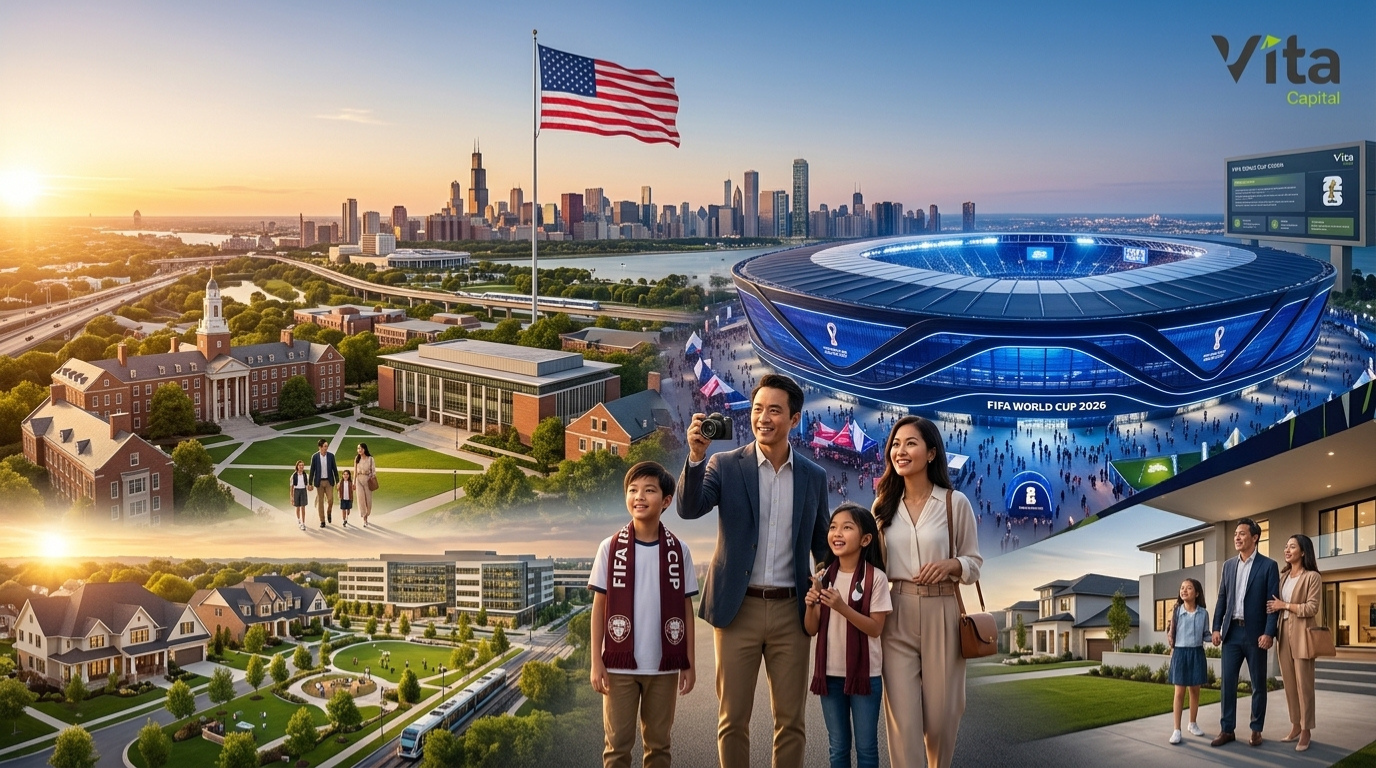
For many Vietnamese families, a trip to the United States for the World Cup is not only about football.
It is often their first opportunity to experience:
The American education system.
The living environment.
Communities and neighborhoods.
Opportunities available for children and future generations.
Many people who initially entered the United States using a B2 tourist visa later began seriously exploring long-term immigration opportunities.
The EB-5 Immigrant Investor Program with an investment threshold of $800,000 has become one of the most popular pathways for Vietnamese families who are ready to take the next step.
A World Cup trip often becomes the starting point for a broader understanding of life in America.
A U.S. Tourist Visa for the World Cup Could Be the First Step Toward Something Bigger
For many Vietnamese families, a trip to the United States for the World Cup is not just about football.
It may be the first time they see America with their own eyes: its education system, quality of life, neighborhoods, economic opportunities, and the environment in which children can grow and thrive.
Many travelers who initially visit the United States on a B2 tourist visa later begin seriously exploring long-term immigration opportunities.
And among the available immigration pathways, the EB-5 Immigrant Investor Program requiring an investment of $800,000 has become one of the most popular options for Vietnamese families seeking permanent residency in the United States.
A World Cup trip often provides a unique opportunity to experience life in America firsthand before making major decisions about education, business, or immigration.
VITA CAPITAL From Your First U.S. Trip to Permanent Residency
If you are planning to travel to the United States for the 2026 World Cup and would like to explore long-term immigration opportunities for your family, VITA CAPITAL is ready to guide you every step of the way.
VITA CAPITAL Your Global Future supports Vietnamese investors from their very first visit to America through the complete journey toward obtaining permanent residency.
Services include:
EB-5 investment immigration consulting
Education planning for children
State and city selection based on family goals
Post-settlement financial planning
Long-term residency and lifestyle consulting
Whether your goal is simply to attend the World Cup or to build a long-term future in the United States, proper planning today can open opportunities for generations to come.
Final Thoughts
Obtaining a U.S. tourist visa for the 2026 World Cup is not complicated when you understand the process and prepare properly.
The key factors are:
Completing the DS-160 accurately.
Demonstrating strong ties to Vietnam.
Providing clear financial evidence.
Maintaining consistency throughout the application and interview process.
Presenting a realistic travel itinerary.
A B1/B2 visa can remain valid for up to ten years, making it far more valuable than a single World Cup trip. It can be used for future tourism, business travel, family visits, and educational exploration in the United States.
For many Vietnamese families, a World Cup journey becomes much more than a sporting event; it becomes an opportunity to discover new possibilities, evaluate future plans, and gain a deeper understanding of life in America.
If you are preparing for World Cup 2026 and would like to learn more about permanent residency opportunities through the EB-5 program, VITA CAPITAL is ready to provide personalized guidance for your family's future.